Quick Answer
Both electrolysis and laser hair removal are effective methods for reducing unwanted hair, but they work differently. Laser hair removal is often chosen for larger treatment areas and provides long-term hair reduction, while electrolysis permanently treats individual hair follicles and is effective on virtually all hair colors and skin types. The best choice depends on your hair color, treatment area, and long-term goals.
Electrolysis permanently treats individual follicles and works on all hair colors, while laser hair removal is often faster for larger areas and works best when hair has enough pigment for the laser to target.
Electrolysis vs. Laser Hair Removal at a Glance
| Feature | Electrolysis | Laser Hair Removal |
|---|---|---|
| Primary Result | Permanent hair removal | Long-term hair reduction |
| FDA Recognition | Only FDA-recognized permanent hair removal method | FDA-cleared for permanent hair reduction |
| Blonde Hair | Effective | Limited effectiveness |
| Gray or White Hair | Effective | Not typically effective |
| Red Hair | Effective | May have limited effectiveness |
| Dark Hair | Effective | Excellent candidate |
| Fine Hair | Effective | Results vary |
| Most Skin Tones | Effective | Modern systems treat many skin tones |
| Precision for Facial Hair | Excellent | Good |
| Large Treatment Areas | More time intensive | Faster treatment sessions |
| Individual Hair Removal | Excellent | Less precise |
Understanding Your Hair Removal Options
If you're tired of shaving, waxing, or constantly plucking unwanted hair, you've probably researched both electrolysis and laser hair removal. These are two of the most popular professional hair removal treatments available today, but they achieve results using completely different technology.
Both treatments can dramatically reduce unwanted hair and improve confidence. Depending on your hair color, skin type, treatment area, and expectations, one treatment may be a better fit — or you may benefit from using both as part of a comprehensive hair removal plan.
How Laser Hair Removal Works
Laser hair removal uses concentrated light energy that targets pigment inside the hair shaft. The heat damages the follicle and slows future hair growth.
Because laser technology relies on pigment, darker hair generally responds best. Modern laser systems have expanded treatment options for many skin tones, making treatment more versatile than ever before.
Many clients enjoy years of significant hair reduction following a series of treatments, although occasional maintenance sessions may be beneficial.
How Electrolysis Works
Electrolysis takes a different approach.
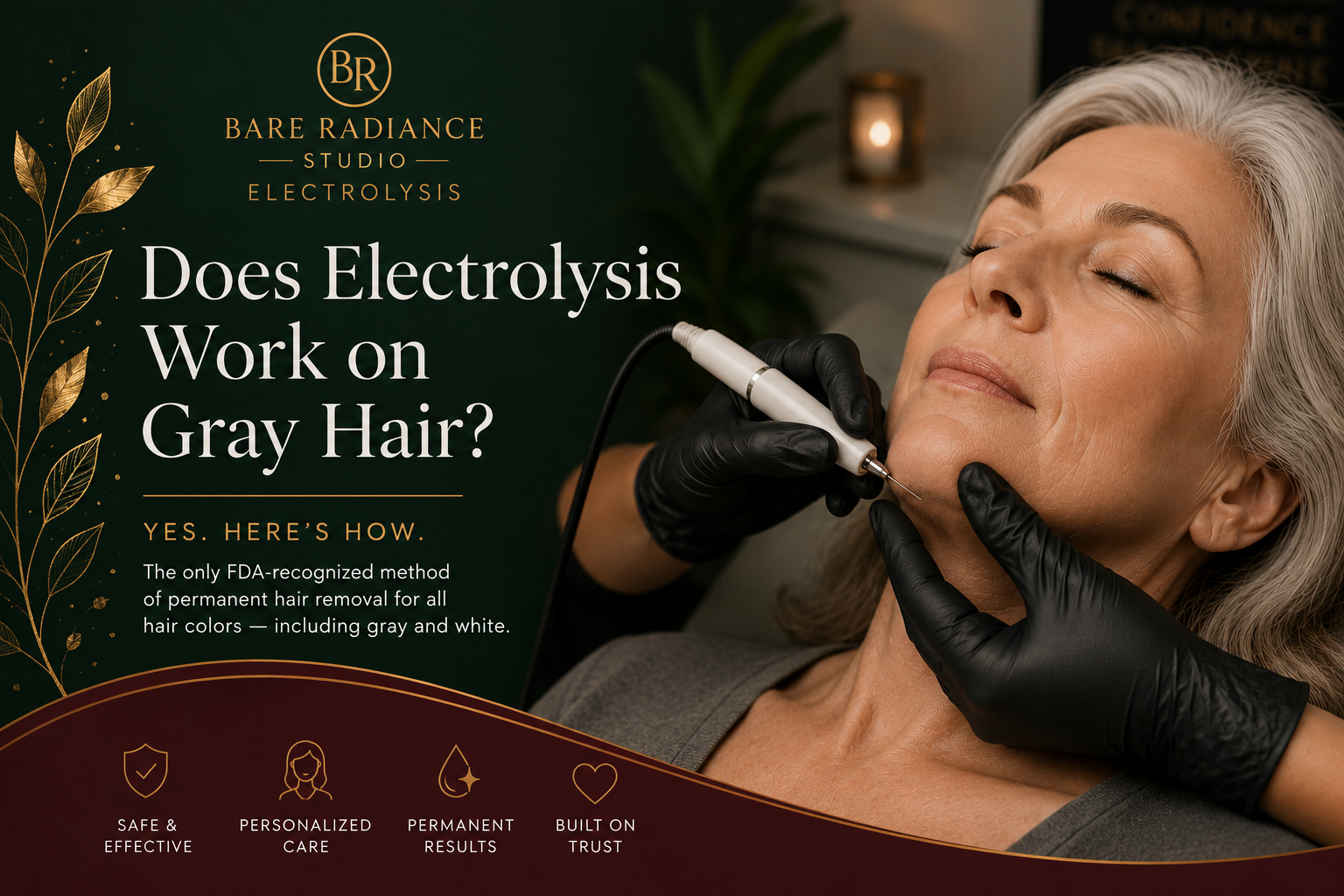
A tiny sterile probe is inserted into the natural opening of each hair follicle, where a small amount of electrical energy permanently destroys the follicle's growth center.
Because electrolysis does not depend on pigment, it can effectively treat:
- Blonde hair
- White hair
- Gray hair
- Red hair
- Dark hair
- Fine hair
- Coarse hair
This versatility makes electrolysis an excellent option for clients whose hair may not respond predictably to light-based treatments. To learn more about what treatment feels like, read our guide on Does Electrolysis Hurt?
Permanent Hair Removal vs. Hair Reduction
The terminology surrounding these treatments often causes confusion.
Electrolysis is the only FDA-recognized method of permanent hair removal, meaning treated follicles are permanently disabled.
Laser hair removal is commonly described as providing permanent hair reduction, meaning hair growth can be significantly reduced for extended periods, although some maintenance treatments may be beneficial depending on individual biology and hormonal changes.
Both technologies have proven value and continue to help many people reduce unwanted hair.
Electrolysis is used for permanent hair removal. Laser hair removal is commonly used for long-term hair reduction. Both can be useful depending on your goals.
Hair Color Can Influence Your Results
Hair color is one of the biggest factors when selecting a treatment.
Laser technology relies on pigment within the hair, making darker hair the ideal candidate.
Very light blonde, gray, white, or red hairs often contain insufficient pigment for predictable laser results.
Electrolysis works independently of pigment, allowing it to permanently treat hair regardless of color.
Facial Hair and Hormonal Hair Growth
Facial hair is one of the most common concerns among electrolysis clients.
Hormonal changes associated with aging, menopause, pregnancy, or conditions such as PCOS can contribute to unwanted facial hair growth that becomes increasingly difficult to manage with shaving or tweezing.
Electrolysis is frequently selected for areas such as:
- Upper lip
- Chin
- Jawline
- Neck
- Sideburns
- Individual coarse hairs
Because each follicle is treated individually, electrolysis offers exceptional precision for smaller treatment areas. Learn more about facial hair removal services at Bare Radiance Studio.
Treating Larger Areas
Laser hair removal is commonly selected for larger treatment areas including:
- Legs
- Arms
- Back
- Chest
- Bikini line
Since multiple follicles can be treated simultaneously, appointments for larger body areas are often completed more quickly.
Electrolysis can also permanently remove hair from these areas but generally requires more treatment time because every follicle is treated individually.
Can You Combine Electrolysis and Laser?
Yes.
Many clients use laser hair removal to reduce dense hair growth across larger body areas before using electrolysis to permanently remove remaining lighter or resistant hairs.
The two treatments often complement each other well and can be part of the same long-term hair removal strategy.
Some clients choose laser first for broader reduction, then electrolysis for detailed permanent cleanup of lighter or resistant hairs.
Does Electrolysis Hurt?
Everyone experiences treatment differently.
Laser hair removal is often compared to the sensation of a rubber band snapping against the skin.
Electrolysis is commonly described as a brief warmth or tiny pinch lasting only a fraction of a second.
Comfort levels can vary depending on the treatment area, hydration, hormones, hair thickness, and individual pain tolerance.
Most clients become increasingly comfortable as treatments progress. For a deeper look at what to expect, read Does Electrolysis Hurt? What to Expect During Permanent Hair Removal Treatment.
How Many Treatments Will I Need?
Hair grows in cycles, which means multiple treatment sessions are necessary regardless of the technology used.
Both laser hair removal and electrolysis require treatments over several months in order to effectively target hairs during their active growth phase.
Consistency is one of the most important factors in achieving long-lasting results.
The Bottom Line
Electrolysis and laser hair removal are both outstanding options for reducing unwanted hair, and each offers unique advantages depending on your individual goals.
Laser hair removal is often preferred for larger treatment areas and long-term hair reduction, while electrolysis provides a permanent solution for individual follicles and remains effective regardless of hair color or skin type.
If you're considering permanent hair removal in the St. Louis or St. Charles County area, a consultation can help determine which approach best aligns with your hair type, treatment goals, and long-term expectations. Every client is unique, and a personalized treatment plan can help you achieve the results you're looking for.
Key Takeaways
- Electrolysis is the only FDA-recognized method of permanent hair removal.
- Laser works best on darker hair — blonde, gray, white, and red hair often doesn't respond as well.
- Electrolysis works on all hair colors and virtually all skin tones.
- Laser is often faster for larger areas; electrolysis provides more precision for facial and fine hair.
- Many clients combine both methods for best long-term results.
- The right choice depends on your hair color, treatment area, and long-term goals.
Frequently Asked Questions
Yes. Electrolysis permanently treats individual follicles and is recognized as the only FDA-recognized method of permanent hair removal. Once a follicle is treated, it cannot produce hair again.
Laser technology relies on pigment and generally works best on darker hair. Blonde, gray, white, and some red hairs often respond better to electrolysis, which works independently of pigment.
Absolutely. Many clients combine both treatments to maximize their results. Laser can reduce overall density across larger areas, and electrolysis can then permanently address remaining hairs — including lighter hairs laser can't effectively target.
When performed using proper technique and appropriate sanitation practices, electrolysis has been successfully used for permanent hair removal for more than 100 years and has an excellent safety record.
Laser hair removal typically treats large body areas more quickly because multiple follicles are targeted simultaneously. Electrolysis requires more time but provides unmatched precision and is the only option for permanent removal regardless of hair color.