If you have spent years shaving, waxing, tweezing, or paying for laser treatments that never fully solved the problem, you have probably wondered whether electrolysis is truly permanent. The answer is yes — but understanding how and why it works can help you set realistic expectations.
Yes. Electrolysis is the only FDA-recognized method of permanent hair removal. Once a follicle has been successfully treated, it cannot produce another hair. Multiple sessions are needed because hair grows in cycles, and not every follicle is active at the same time.
Is Electrolysis Really Permanent?
If you have spent years shaving every morning, scheduling monthly wax appointments, tweezing chin hairs in the car mirror, or investing in laser treatments that never seem to produce lasting results, you have probably asked the same question: is electrolysis actually permanent?
The answer is yes — with one important clarification.
Electrolysis permanently destroys individual hair follicles so they can no longer produce hair. That means a successfully treated follicle is permanently disabled.
What electrolysis cannot do is prevent brand-new follicles from becoming active later because of hormonal changes, medications, pregnancy, menopause, PCOS, or other biological factors.
That distinction matters.
When people say "the hair came back," they are often seeing new follicles become active — not the same follicle regrowing after successful treatment.
For people tired of the exhausting cycle of shaving, waxing, threading, plucking, and hiding unwanted hair, electrolysis offers something temporary methods cannot: a path toward permanent hair removal.
How Electrolysis Works
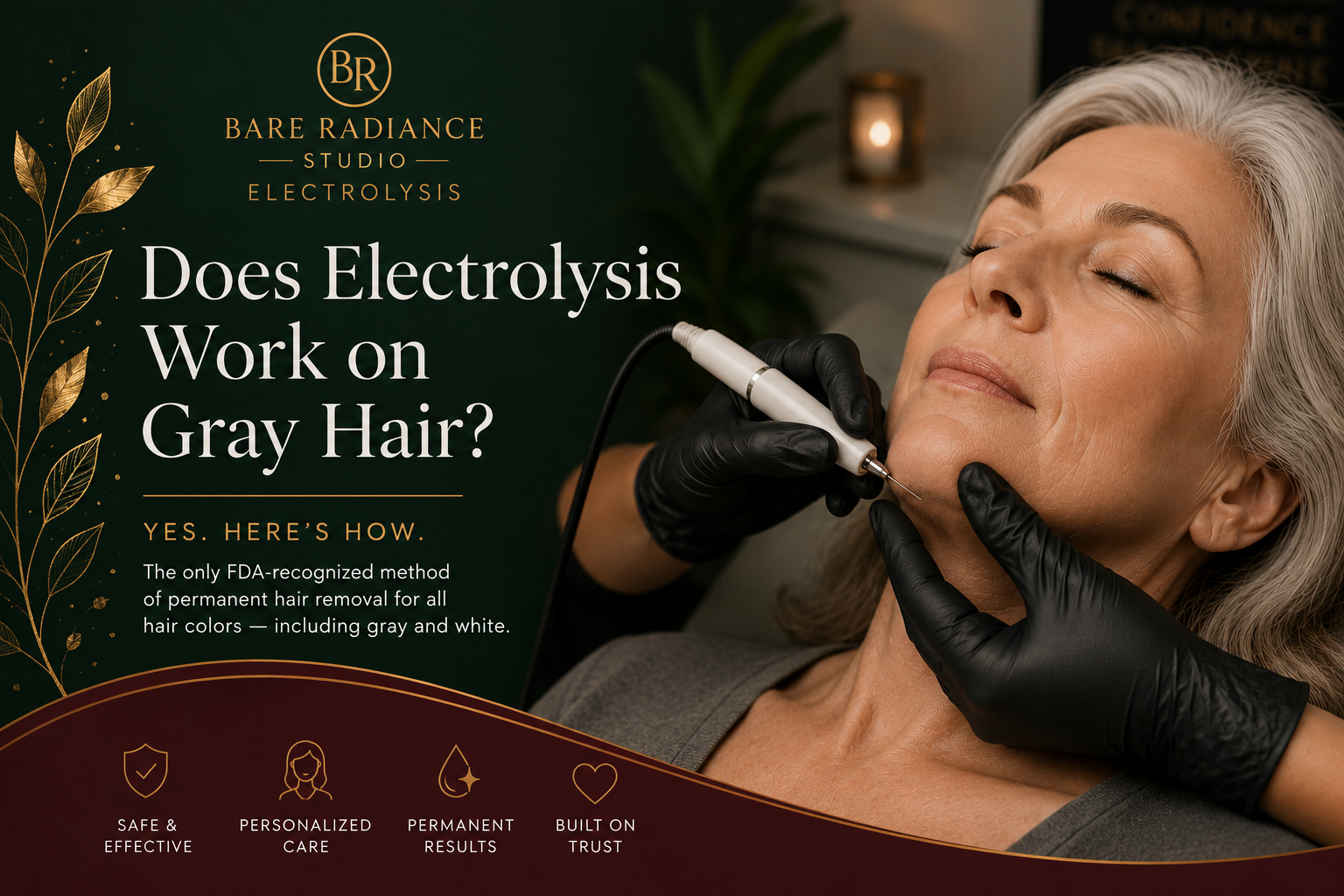
Electrolysis uses an extremely fine sterile probe that is gently inserted into the natural opening of the hair follicle. A small, carefully controlled amount of energy is delivered to the follicle to permanently disable the cells responsible for producing hair. The treated hair is then removed with tweezers — when electrolysis is performed correctly, the hair should slide out easily rather than being forcefully plucked.
Because electrolysis treats each follicle individually, it is precise and highly customizable. It can be used on many common treatment areas, including:
- Chin, upper lip, and jawline
- Neck and cheeks
- Eyebrows
- Underarms
- Bikini line
- Abdomen and chest
- Legs
Unlike laser hair removal, electrolysis does not rely on pigment. That means it can treat blonde hair, gray hair, white hair, red hair, dark hair, fine hair, and coarse hair equally. This is one of the reasons electrolysis remains the gold standard for permanent hair removal, especially for facial hair and lighter hairs that laser cannot effectively target.
Why Multiple Treatments Are Needed
One of the most common misconceptions about electrolysis is that every hair can be permanently removed in a single appointment.
Hair does not grow all at once. Each follicle moves through different phases of the hair growth cycle. At any given time, some hairs are visible and active while others are resting beneath the surface of the skin. Electrolysis is most effective when a hair is treated during the active growth stage.
That is why permanent results require a series of appointments over time. Each session targets the hairs that are ready to be treated. As dormant follicles become active in later weeks or months, those follicles can then be treated as well.
Over time, clients usually notice:
- Less visible hair between appointments
- Finer and slower regrowth
- Smaller treatment areas needing attention
- Shorter session times as fewer active follicles remain
- Increased confidence between appointments
Electrolysis is not instant, but it is cumulative. Every properly treated follicle is one less follicle capable of producing hair again.
What Results Look Like Over Time
Electrolysis progress is gradual. In the beginning, clients may still see new hairs appear between appointments because untreated follicles are continuing to cycle into active growth. This does not mean treatment is failing — it means the area is moving through normal hair growth cycles.
With consistent appointments, the visible hair typically becomes thinner, lighter in density, and easier to manage. Treatment sessions may become shorter as fewer active follicles remain. This is why before-and-after comparisons can be meaningful — they illustrate the cumulative nature of electrolysis rather than implying that every hair disappears overnight.
Real Electrolysis Progress
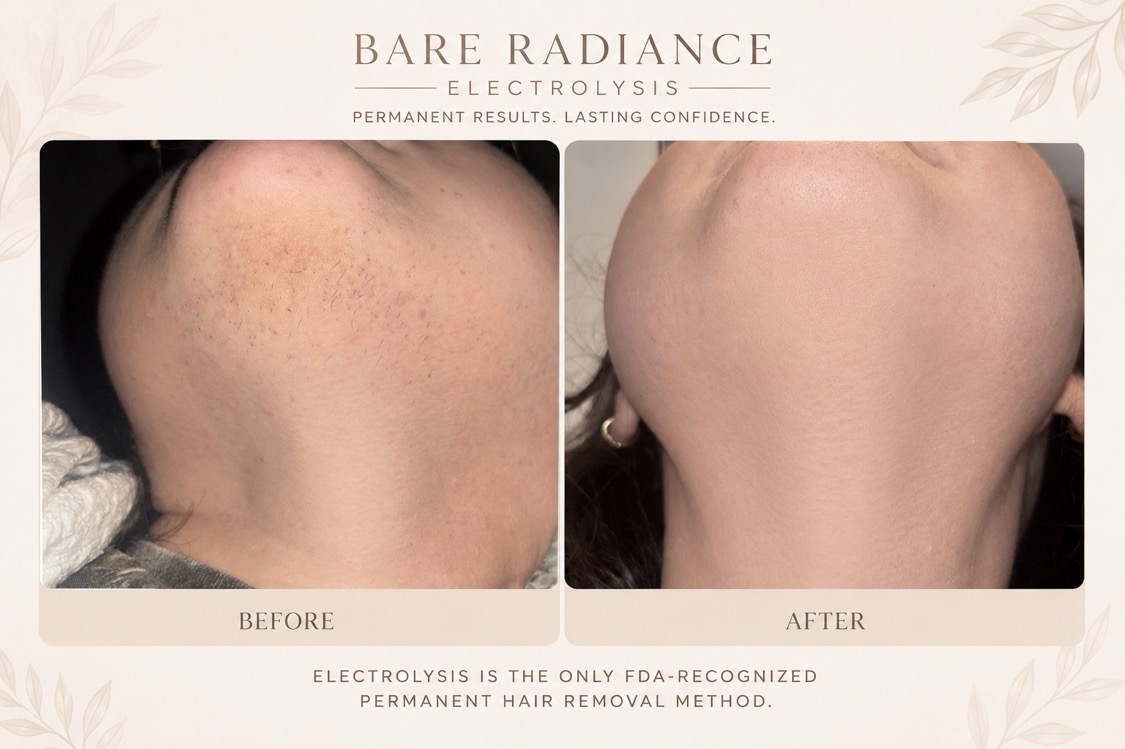
Real client progress. Results vary by individual and depend on hair density, hormones, treatment consistency, and the natural hair growth cycle. Permanent hair removal is achieved through a series of treatments.
Electrolysis vs. Laser Hair Removal
Many people assume laser hair removal and electrolysis accomplish the same thing, but they are not identical. Laser hair removal is often described as permanent hair reduction — helpful for reducing large areas of dark hair when there is strong contrast between hair color and skin tone. Electrolysis is different because it treats the individual follicle directly and is recognized as permanent hair removal.
| Electrolysis | Laser Hair Removal |
|---|---|
| FDA-recognized as permanent hair removal | Typically considered permanent hair reduction |
| Works on every hair color | Works best on dark hair |
| Works on every skin tone | May be less effective for certain skin/hair combinations |
| Treats one follicle at a time | Treats multiple hairs at once |
| Effective on blonde, gray, white, and red hair | Often ineffective on light-colored hair |
| Common for facial and hormonal hair growth | Common for larger areas of dark hair |
| Requires consistency over time | Often requires maintenance sessions |
For clients with blonde, gray, red, white, fine, or hormonally influenced facial hair, electrolysis is often the better long-term solution because it does not depend on hair pigment.
Can Hair Ever Come Back?
Once a follicle has been successfully treated through electrolysis, that specific follicle cannot produce another hair. However, the human body can change.
Hormonal shifts can activate follicles that were previously dormant. This may happen because of:
- PCOS or other hormonal conditions
- Pregnancy or postpartum changes
- Menopause
- Thyroid changes
- Certain medications
- Aging
These are new active follicles, not the same treated follicles growing back. Some clients complete treatment and never need additional appointments. Others choose occasional maintenance later in life if new hormonal growth appears — this is especially common with facial hair, because the chin, upper lip, jawline, and neck can be hormonally sensitive areas.
Electrolysis permanently treats the follicles it successfully destroys, but it cannot freeze the body's future hormonal changes.
Is Electrolysis Worth It?
For many clients, electrolysis is absolutely worth it because it addresses the root of the problem instead of temporarily managing the symptom.
Temporary hair removal can become expensive and emotionally exhausting over time. Think about the cumulative cost of razors, waxing appointments, threading, tweezing, depilatory creams, laser packages, maintenance sessions, and makeup used to hide irritation or stubble shadow.
The cost is not only financial. Many people also spend years planning outfits, avoiding close-up photos, checking their chin in the mirror, worrying about lighting, or feeling embarrassed by stubble and irritation.
Electrolysis requires patience, but each appointment moves the client closer to long-term freedom from that cycle. For clients who are committed to the process, the results can be genuinely life-changing.
Permanent Hair Removal in St. Louis
If you live in St. Louis, St. Charles, O'Fallon, St. Peters, Wentzville, Lake St. Louis, or the surrounding communities, Bare Radiance Electrolysis offers personalized treatment plans for permanent hair removal.
Every client's hair growth pattern is different. Your treatment plan may depend on the treatment area, hair density and texture, skin sensitivity, hormonal history, previous hair removal methods, and your personal goals.
Whether you are treating chin hair, upper lip hair, neck hair, hormonal facial hair, stubborn hairs after laser, or light-colored hairs that laser could not remove, electrolysis can provide a lasting solution with the right plan and consistency.
Bare Radiance Electrolysis is focused on education, comfort, and realistic expectations so clients understand the process before beginning treatment.
Key Takeaways
- Electrolysis is the only FDA-recognized method of permanent hair removal.
- A successfully treated follicle cannot produce hair again — ever.
- Multiple sessions are needed because hair grows in cycles; not all follicles are active at once.
- Electrolysis works on every hair color, including blonde, gray, white, and red.
- Hormonal changes can activate new follicles, but not regrow treated ones.
- For facial and light-colored hair, electrolysis is generally the superior long-term option.
Frequently Asked Questions
Yes. Electrolysis permanently destroys individual hair follicles. Once a follicle has been successfully treated, it cannot produce another hair. It is the only hair removal method recognized by the FDA as permanent.
Multiple appointments are needed because hair grows in cycles. Not every follicle is active or visible during a single session. Electrolysis is most effective during the active growth phase, so dormant follicles must be treated as they cycle into activity over subsequent appointments.
Yes. Electrolysis works on all hair colors, including blonde, gray, white, red, and dark hair. Unlike laser hair removal, electrolysis does not rely on hair pigment — it treats the follicle directly using electrical energy.
It depends on the goal. Laser can reduce dark hair over larger areas, but electrolysis is the only FDA-recognized method of permanent hair removal and works on every hair color and skin tone. For light-colored hair, hormonal facial hair, or anyone who wants true permanence, electrolysis is generally the better option.
Yes. Hormonal changes — including those from PCOS, pregnancy, menopause, thyroid changes, or certain medications — can activate previously dormant follicles. These are new follicles becoming active, not successfully treated follicles growing back. Some clients choose occasional maintenance if new hormonal growth appears later in life.
Yes. Electrolysis is commonly used for chin, upper lip, jawline, cheek, and neck hair. It is especially well-suited for facial hair because it works on every hair color, including lighter hairs that laser cannot target effectively.
Yes. Shaving is generally acceptable between appointments and does not interfere with treatment. Plucking, waxing, and tweezing should usually be avoided because they remove the hair from the follicle before it can be treated during your next session.
Results vary by individual. Most clients need a series of treatments over several months because of hair growth cycles, density, and treatment consistency. Each session treats the hairs that are currently active, and visible reduction accumulates over time. A consultation with Heather can help you understand what a realistic timeline looks like for your specific goals and treatment area.