If you've ever looked in the mirror and noticed a few stubborn gray hairs on your chin, upper lip, or jawline, you're not alone. For many women, these coarse hairs seem to appear almost overnight, becoming an unexpected part of aging, hormonal changes, or menopause.
Perhaps you've already tried tweezing them every morning. Maybe you've invested in laser hair removal only to discover that the gray hairs never disappeared. If so, you're probably asking the same question many of our clients do:
Can gray hair actually be removed permanently?
The answer is yes.
Electrolysis is highly effective at permanently removing gray, white, blonde, and red hair because it doesn't rely on hair color to work. Instead, it treats each individual hair follicle directly, making it the only FDA-recognized method of permanent hair removal for all hair colors and skin tones.
Whether you're dealing with a handful of wiry chin hairs or more widespread facial hair growth, electrolysis offers a long-term solution that doesn't depend on pigment — making it especially valuable for clients whose hair has become lighter with age.
Does electrolysis work on gray hair?
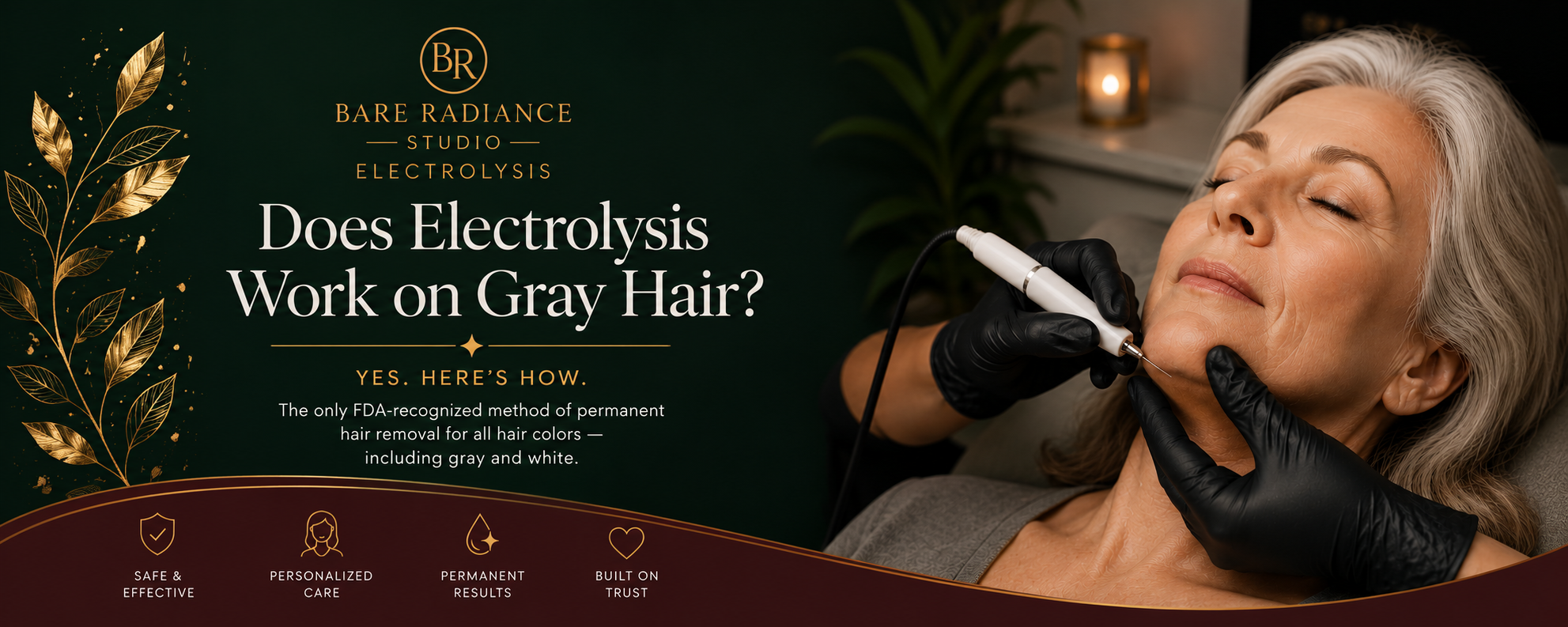
Yes. Electrolysis permanently removes gray, white, blonde, and silver hair by treating each hair follicle individually with a tiny, precise electrical current. Unlike laser hair removal, electrolysis does not require pigment to identify the hair, making it the most effective permanent solution for unwanted gray facial and body hair.
Why Gray Hair Is Different
To understand why electrolysis is so effective, it helps to first understand why other hair removal methods often fall short.
As hair loses its natural pigment, it becomes more difficult for light-based treatments to recognize. This is why many people discover that while laser hair removal successfully reduced their darker hairs, the gray or white hairs remained unchanged.
In reality, the treatment didn't fail — it simply reached the limits of what laser technology is designed to do.
Gray hair contains little to no melanin, the pigment responsible for giving hair its color. Since laser systems are engineered to seek out that pigment, they have nothing reliable to target once the hair turns gray.
"Imagine trying to locate a single white thread in a pile of white fabric. Without contrast, it becomes incredibly difficult to distinguish one from the other. Laser technology faces a similar challenge with gray hair."
Electrolysis works in an entirely different way. Rather than searching for pigment, a trained electrologist carefully inserts a sterile, ultra-fine probe into the natural opening of the hair follicle. A precise electrical current is then applied to destroy the cells responsible for future hair growth. Because the treatment targets the follicle itself — not the color of the hair — it remains equally effective on gray, white, blonde, red, and dark hair alike.
For many clients, this difference is life-changing. It's often the reason they finally find a permanent solution after years of temporary fixes.
Why So Many Women Notice Gray Facial Hair Later in Life
Many women are surprised when facial hair seems to become more noticeable in their 40s, 50s, and beyond. While the appearance of gray hairs may feel sudden, it's often the result of several natural changes happening at once.
As estrogen levels decline during perimenopause and menopause, the balance between estrogen and androgens (male hormones that women naturally produce in smaller amounts) begins to shift. This hormonal change can stimulate the growth of coarse hairs on areas such as the chin, jawline, upper lip, and neck.
At the same time, those hairs gradually lose their pigment and become gray or white. This combination creates a frustrating situation for many women:
- The hairs become thicker and more noticeable
- Traditional laser hair removal becomes less effective
- Tweezing and waxing become an endless routine
- Makeup does little to disguise the texture of coarse facial hair
Fortunately, the color of the hair doesn't determine whether it can be removed permanently. With electrolysis, each follicle is treated individually, allowing gray hairs to be eliminated just as effectively as darker hairs.
Laser Hair Removal vs. Electrolysis for Gray Hair
It's understandable why so many people assume laser hair removal is the answer for unwanted hair. After all, laser treatments are heavily advertised and can be very effective for the right candidate. The key phrase, however, is the right candidate.
Laser hair removal works best on individuals with dark hair and lighter skin because the laser is attracted to melanin — the pigment that gives hair its color. When that pigment is absent, as it is in gray, white, blonde, or many red hairs, the laser cannot effectively identify the follicle.
That doesn't mean laser technology is "bad." It simply means it has limitations.
| Requires pigment to work | ✗ Yes — needs melanin | ✓ No pigment needed |
| Effective on dark hair | ✓ Works well | ✓ Works well |
| Effective on gray hair | ✗ Ineffective | ✓ Fully effective |
| Effective on white hair | ✗ Ineffective | ✓ Fully effective |
| Effective on blonde hair | ✗ Ineffective | ✓ Fully effective |
| Treatment method | Multiple hairs at once | Each follicle individually |
| FDA classification | Permanent reduction | Permanent removal |
Electrolysis approaches permanent hair removal differently. Instead of relying on pigment, each follicle is treated individually using a sterile probe that delivers a precise electrical current directly to the hair's growth center. Because the follicle itself is being treated, the color of the hair simply doesn't matter.
For clients whose primary concern is gray facial hair, electrolysis is often the most predictable long-term solution.
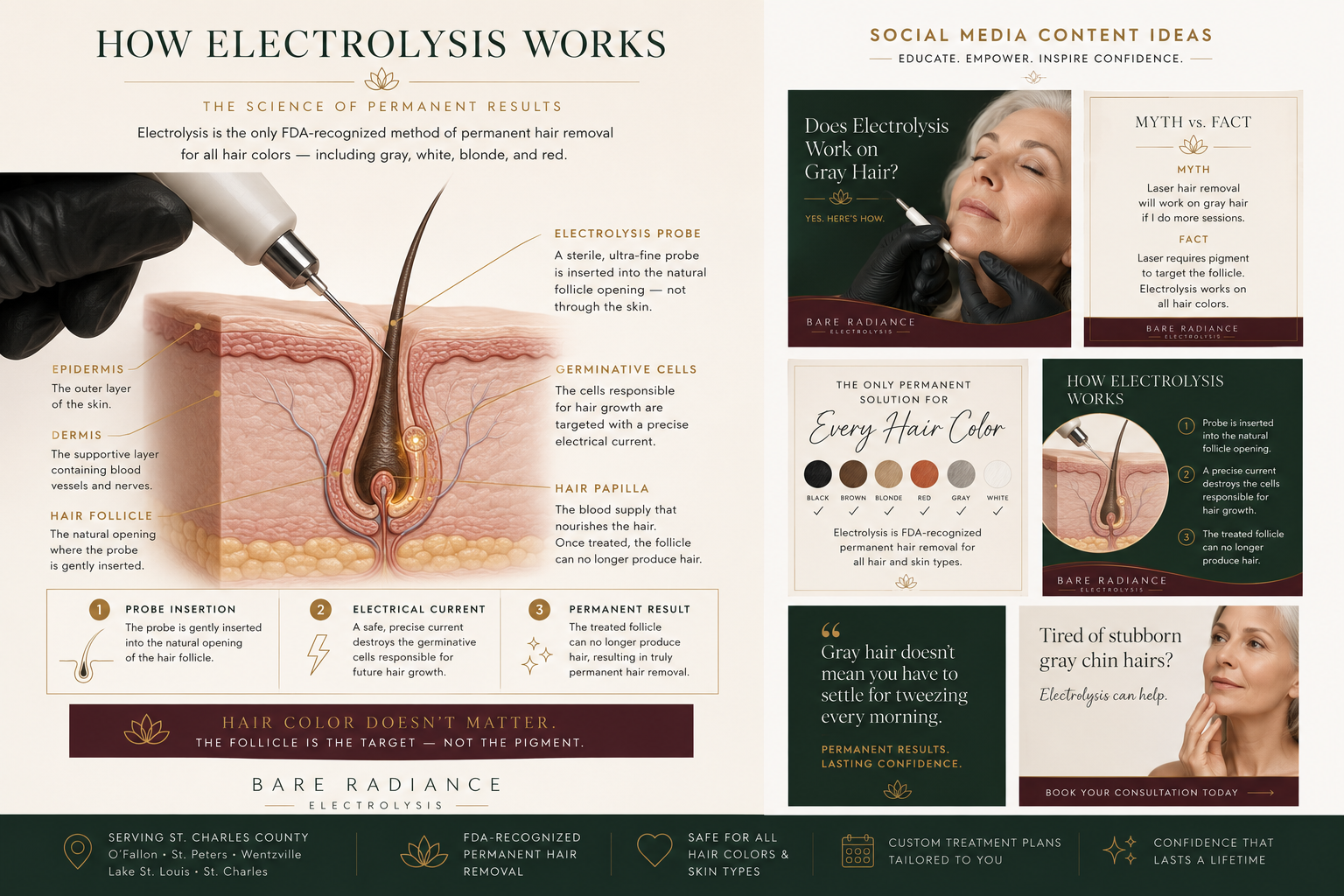
How electrolysis permanently treats each follicle — and why hair color doesn't matter. The follicle is the target, not the pigment.
What Areas Can Be Treated?
Gray hair can appear almost anywhere on the body, and electrolysis can be customized to treat virtually any area where unwanted hair grows. Some of the most common treatment areas include:
Chin
Those coarse chin hairs that seem to appear overnight can become part of a frustrating daily tweezing routine. Electrolysis permanently treats each follicle, eliminating the need to search for those same hairs every morning.
Upper Lip
Gray or white hairs on the upper lip are often difficult to see until sunlight catches them. Electrolysis provides a precise treatment that permanently removes individual hairs without affecting the surrounding skin.
Jawline and Neck
Hormonal changes can cause new hair growth along the jawline and neck during perimenopause and menopause. These areas respond well to electrolysis because treatment is based on the follicle — not hormone levels or hair color.
Sideburns
Some clients prefer to soften or reshape the sideburn area as hair texture changes with age. Electrolysis offers permanent precision that no razor or wax can match.
Eyebrows
Stray gray eyebrow hairs can also be permanently removed while preserving the natural shape of your brows — a delicate treatment best performed by an experienced electrologist.
Body Hair
Electrolysis is not limited to facial hair. Gray hairs on the abdomen, chest, underarms, bikini area, arms, or legs may also be treated depending on your goals.
Permanent Results. Lasting Confidence.
Serving O'Fallon, St. Peters, Wentzville, Lake Saint Louis, and all of St. Charles County.
Book Your Free ConsultationHow Many Treatments Will I Need?
One of the most common questions we receive is: "If electrolysis is permanent, why are multiple appointments necessary?"
The answer lies in the natural hair growth cycle. Every hair on your body progresses through different stages of growth. Only hairs that are actively growing can be permanently treated during a given appointment. Since not every follicle is active at the same time, multiple treatments allow your electrologist to target new hairs as they enter the appropriate stage.
The total number of treatments depends on several factors, including:
- The size of the treatment area
- The density of the hair
- Hormonal influences
- Previous tweezing or waxing history
- How long the hair has been present
- Consistency with scheduled appointments
Notice what isn't on that list? Hair color. Gray hair does not require more treatments simply because it is gray.
Should You Tweeze Between Appointments?
It's tempting. You notice one stubborn gray hair a few days before your next appointment and instinctively reach for the tweezers.
Unfortunately, tweezing works against the treatment process. When a hair is plucked, it removes the visible hair shaft that your electrologist needs to effectively treat the follicle. It also disrupts the natural growth cycle, making scheduling less predictable.
Instead of tweezing, most clients are encouraged to trim or shave the area if necessary between appointments. This allows the hair to remain available for permanent treatment during your next visit. Your electrologist will provide personalized recommendations based on the treatment area and your progress.
Is Electrolysis Safe for Mature Skin?
Yes. Many clients beginning electrolysis are in their 40s, 50s, 60s, and beyond.
While mature skin naturally becomes thinner and more delicate over time, treatment settings can be adjusted to suit your skin's individual needs. A qualified electrologist evaluates your skin, hair characteristics, and treatment goals before developing a customized approach.
Temporary redness is normal following treatment and generally resolves quickly with proper aftercare. At Bare Radiance, every treatment is tailored to the individual — not simply the area being treated.
Common Myths About Gray Hair Removal
Frequently Asked Questions
Yes. Electrolysis permanently destroys the hair follicle regardless of whether the hair is white, gray, blonde, red, or dark. Because electrolysis doesn't rely on pigment, white and gray hairs respond just as well as darker hairs.
Once a follicle has been successfully treated, it will no longer produce hair. However, new follicles may become active over time due to normal aging or hormonal changes, which is why occasional maintenance treatments are sometimes recommended.
Most clients describe the sensation as brief and very manageable. Treatment settings are customized for your comfort. If you'd like to learn more, read our article Does Electrolysis Hurt?
Absolutely. Electrolysis is an excellent option for removing isolated gray beard hairs or reshaping portions of the beard that laser cannot effectively treat. The process is the same regardless of gender.
Yes. Many clients schedule treatment specifically for a handful of stubborn chin or upper lip hairs that have become part of their daily routine. There is no minimum number of hairs required to begin treatment.
Permanent Hair Removal in St. Charles County
If you've grown tired of checking the mirror every morning for another stubborn gray chin hair — or spending years cycling through tweezing, waxing, or disappointing laser results — know that you have another option.
At Bare Radiance Electrolysis, clients from O'Fallon, St. Peters, Wentzville, Lake Saint Louis, St. Charles, and surrounding communities receive personalized treatments designed around their individual goals — not a one-size-fits-all approach.
Whether you're treating a single gray hair that bothers you every day or beginning a more comprehensive permanent hair removal journey, electrolysis offers a proven solution backed by decades of clinical use.
Final Thoughts
Gray hair may be a natural part of life, but living with unwanted facial hair doesn't have to be.
Unlike laser hair removal, electrolysis isn't limited by hair color. It works by treating the follicle itself, making it the only FDA-recognized method of permanent hair removal for every hair color and every skin tone.
"For many people, that means finally putting away the tweezers, skipping the magnifying mirror, and enjoying the confidence that comes with a permanent solution."
If you're wondering whether electrolysis is right for you, scheduling a consultation is the best place to start. We'll answer your questions, evaluate your concerns, and create a treatment plan tailored to your unique needs — so you can spend less time worrying about unwanted hair and more time enjoying life.
Imagine waking up tomorrow morning and not reaching for the tweezers.